How the Oscar, Kody and Cleo Stories Help Children to Understand Their Feelings
A gentle guide to helping children understand big feelings through everyday moments, supportive language, and story-based learning. Discover how the Oscar, Kody and Cleo books and their reflective questions create safe, meaningful conversations that build emotional awareness over time.
4/19/20264 min read
There’s a moment most parents recognise. Your child is upset; tears, frustration, maybe even anger spilling out in ways that feel bigger than the situation.
And in that moment, you pause… wondering what to say. Not just to stop the behaviour, but to actually help them.
Because for many of us, we weren’t taught how to understand our emotions, let alone how to guide someone else through theirs. And that’s where emotional learning begins.
Emotional Learning Starts Shaping in Everyday Moments
Children aren’t born knowing how to understand what they’re feeling, express it safely and then recover when things feel overwhelming. These are skills, and like any skill, they’re learned over time through repetition, connection, and support.
Often, the most powerful teaching happens in small, everyday moments, such as when a toy is taken, when something feels unfair or when they feel unsure or afraid. These are the moments your child is quietly asking: “What do I do with this feeling?”
The words we use in those moments matter. Not because we need to say the perfect thing, but because our words help shape how children understand their inner world.
That’s why simple phrases can be so powerful:
“That felt really frustrating”
“I’m here with you”
“We can figure this out together”
These kinds of responses calm the moment and they teach your child that emotions are safe, feelings can be named, and they’re not alone in figuring all these things out. But what happens outside those moments matters just as much.
Connecting the Stories to Real-Life Moments
The real magic happens when stories and real life start to link together. A moment comes up. Your child is struggling, overwhelmed, or unsure. Instead of it feeling like a completely new situation, it feels familiar. So you might gently say, “This reminds me of what happened in the story…” or “What did Oscar try when he felt like this?”
Now you’re helping your child recall, reflect, and apply what they’ve already learned in those calm moments.
Building Emotional Awareness Over Time
Emotional learning isn’t about getting it right every time. It’s about building understanding slowly, consistently, and with support. The words you use, the connection you offer and the stories you share when things are calm are all helping your child to build skills that will stay with them for life.
If you’re looking for a gentle place to begin, start with one story. Read it together. Talk about it. Let it be simple. Emotional learning doesn’t need to be complicated. It starts with a story, and the conversation that follows.
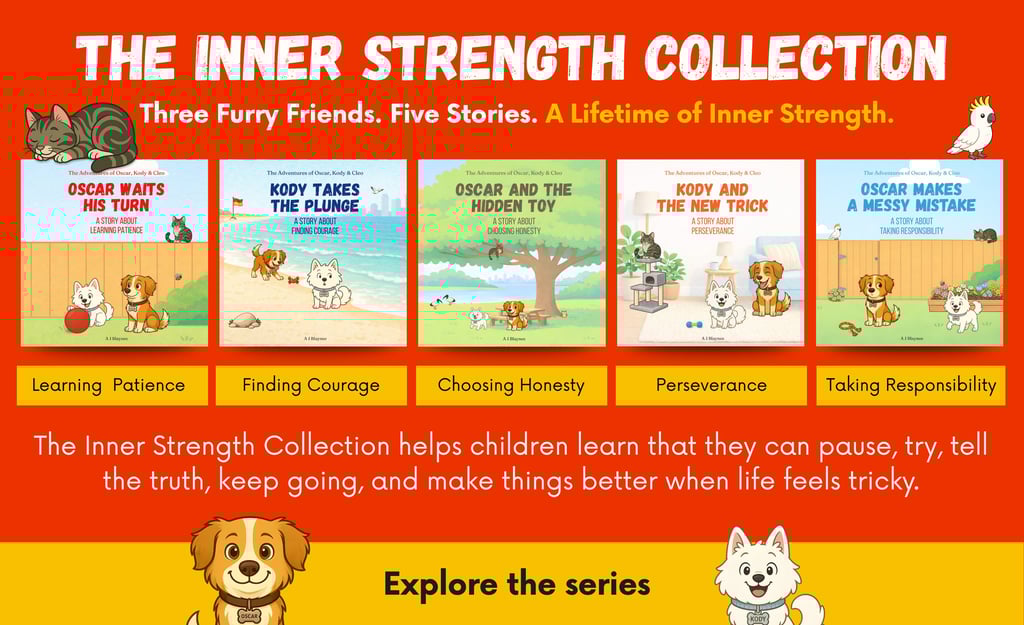
You can find the whole Oscar, Kody and Cleo Collection available for purchase here.
Books Are Such a Powerful Tool for Emotional Learning
When a child is in the middle of big feelings, their brain is often too overwhelmed to fully process a lesson. But during calm, connected moments like reading together, something shifts.
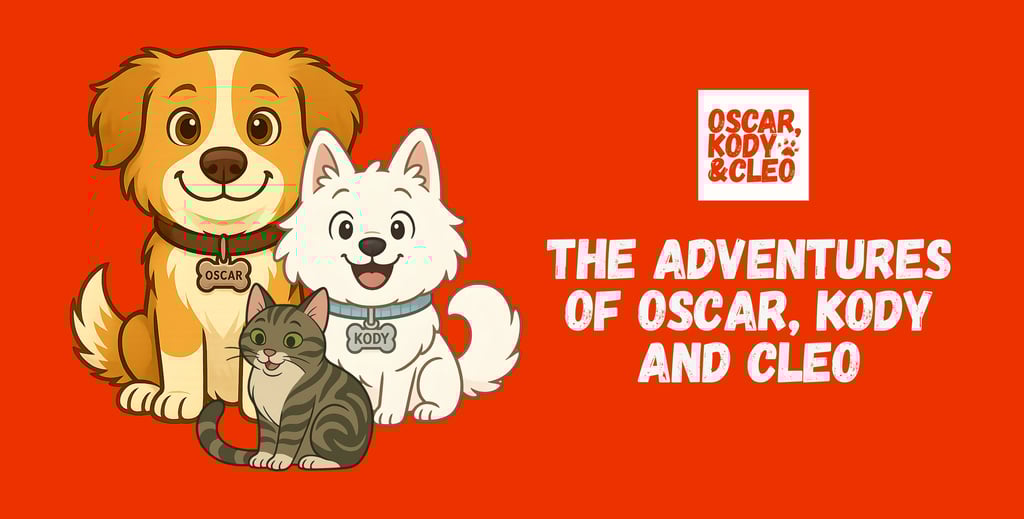
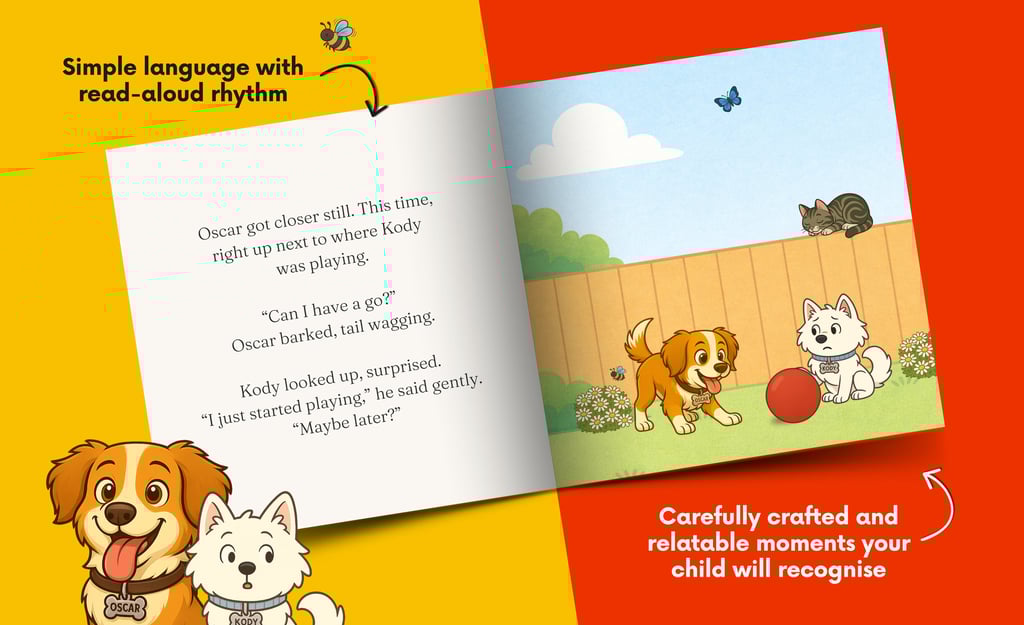
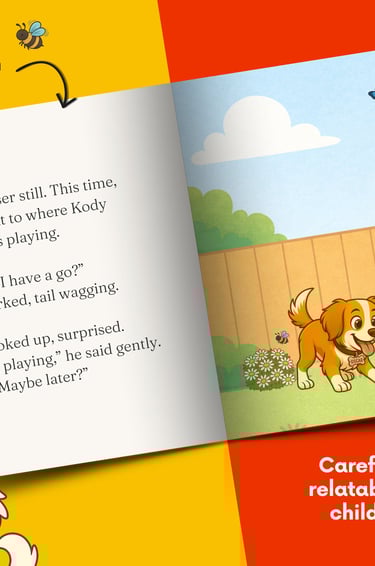
The Oscar, Kody and Cleo books are designed and written to help children through familiar, everyday scenarios.
The stories create a safe distance and allow children to:
see emotions play out without being in trouble
recognise themselves in a character
explore choices, consequences, and feelings without pressure
Instead of being told what to do, they begin to understand why it matters. That’s what makes story-based learning so effective.
How These Stories Support Emotional Growth
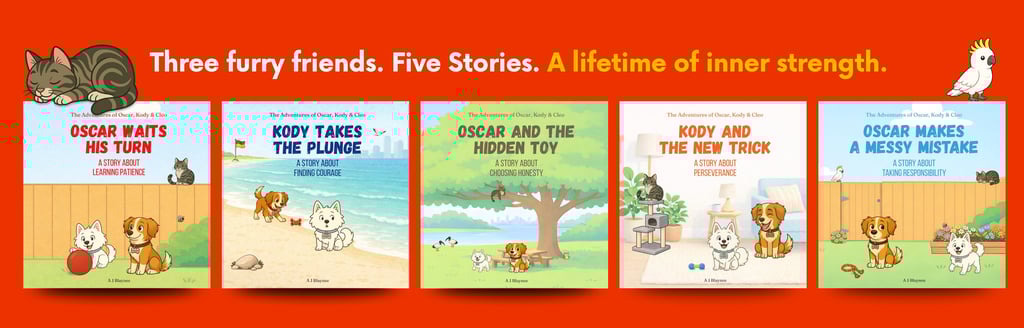
Each Oscar, Kody and Cleo story is designed to gently explore a real childhood challenge like honesty, bravery, responsibility, or giving up too quickly. Rather than correcting behaviour, the story walks alongside the child through the experience.
Through the story, children begin to recognise emotions in themselves, understand the impact of their actions and see alternative ways to respond. And because it’s not happening to them, they’re more open, curious, and reflective. This is where the learning deepens.
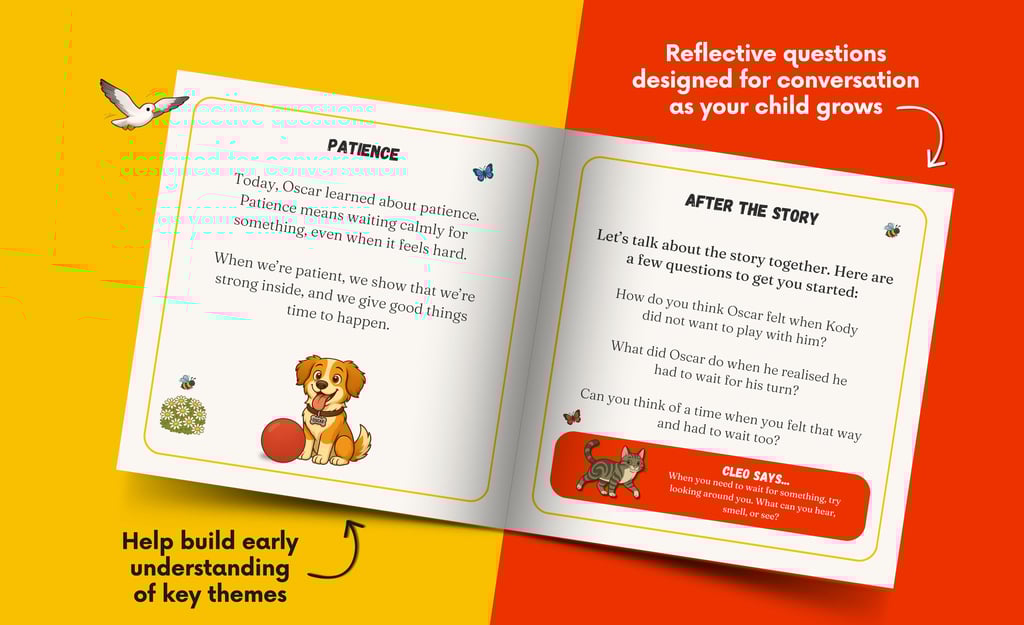
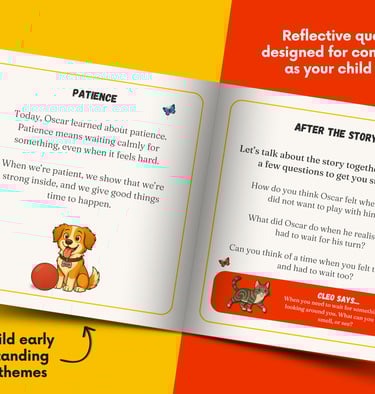
At the end of each book, there are simple, open-ended questions designed to help you explore the story together. The questions aren’t there to test your child, but instead to encourage conversation. You’ll find questions such as “How do you think they felt at that moment?”, “Have you ever felt like that?” and “What do you think you could try next time?”
These questions help children:
connect the story to their own experiences
build emotional awareness
practise problem-solving in a safe environment
Over time, this kind of reflection becomes something they begin to do on their own.
This post contains affiliate links.